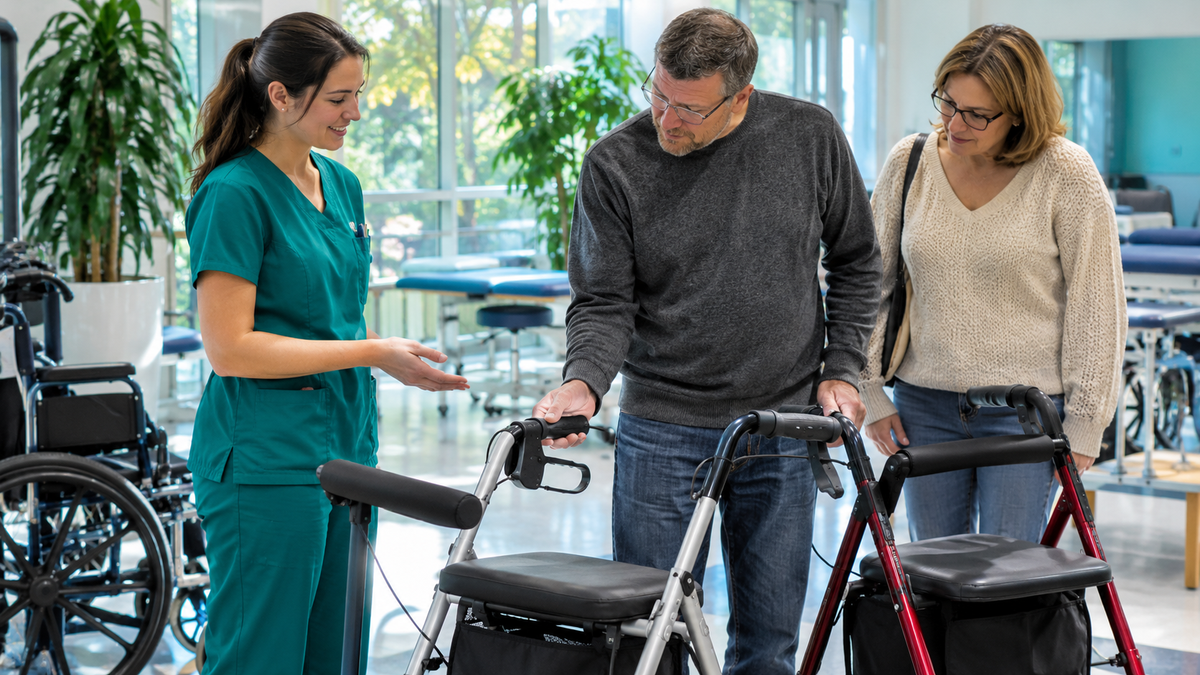
Renting Before Buying: The Mobility Equipment Decision After a Hospital Stay
 Returning home after a hospital stay can require changes to everyday routines, especially when walking, standing, or moving between rooms has become difficult. A rehabilitation professional may recommend equipment to improve safety and independence, but families can face unfamiliar prices and uncertain timelines. Before investigating loan options for necessary mobility equipment, it is worth determining which items are needed temporarily, which may be useful for years, and whether rental or funding assistance is available. The best decision should reflect the patient’s clinical needs as well as the household’s financial circumstances.
Begin With a Professional Assessment
Mobility equipment should fit the person’s physical abilities, home environment, and rehabilitation goals.
A walker, wheelchair, transfer aid, or other device that is appropriate for one patient may be unsuitable for another.
Ask the treating rehabilitation professional which features are essential and whether the recommendation is temporary or long term.
Important considerations may include stability, seat dimensions, weight capacity, adjustability, storage, and safe use in narrow spaces.
Do not select equipment based solely on a low price or attractive product description.
Poorly fitted equipment can create discomfort, reduce independence, or increase the risk of injury.
Understand the Expected Recovery Timeline
The length of time equipment is needed can influence whether renting or buying is more economical.
Someone recovering from a procedure may need assistance for a relatively short period, while a person with a permanent mobility limitation may require dependable equipment indefinitely.
Ask the clinical team when needs are likely to be reassessed.
If mobility is expected to improve, renting certain items may reduce the financial commitment and avoid storing equipment that is no longer necessary.
However, long-term rentals can become expensive.
Compare the projected total rental cost with the price, warranty, and maintenance requirements of purchasing a suitable item.
Examine the Home Before Ordering
A device that works well in a hospital corridor may be difficult to use in a small apartment.
Measure doorways, hallways, bathroom entrances, and available storage spaces.
Consider whether the patient can safely approach seating, access the bathroom, and navigate ordinary household obstacles.
An occupational therapist or another qualified professional may help identify practical concerns.
Avoid purchasing large equipment before confirming that it will fit and function in the intended environment.
Delivery and assembly may also add costs.
If modifications to the home are recommended, obtain separate estimates rather than assuming that a single equipment purchase solves every accessibility concern.
Investigate Available Coverage and Assistance
Insurance policies and public assistance programs may cover certain equipment in particular circumstances.
Eligibility, required documentation, approved suppliers, and reimbursement limits can vary.
Ask the healthcare team whether a prescription, assessment, or other supporting document is necessary.
Contact the relevant insurer or program directly to verify requirements.
Some community organizations may also operate equipment lending programs.
Confirm the condition, availability, and suitability of any borrowed equipment before relying on it.
Do not assume that an item will be reimbursed simply because a healthcare professional recommended it.
Written confirmation is preferable to an informal estimate.
Compare the Complete Ownership Cost
Buying equipment involves more than the purchase price.
Consider accessories, delivery, professional fitting, maintenance, replacement parts, and future servicing.
A lower-priced product without appropriate support may become expensive if repairs are difficult to arrange.
Ask about return conditions and warranty coverage.
If purchasing used equipment, have its condition and suitability assessed appropriately, particularly where mechanical reliability or patient safety is involved.
Do not compromise essential safety features in an effort to reduce costs.
The goal is dependable support for everyday activities, not simply finding the least expensive item in a catalogue.
Avoid Financing Beyond the Genuine Need
Once the appropriate equipment and likely duration of use are established, calculate the shortfall after available coverage, savings, and assistance.
If financing is considered, compare all charges and repayment terms.
The household should be able to manage payments alongside existing expenses, including transportation to appointments, medications, and caregiving needs.
Avoid borrowing for optional accessories that have not been recommended or demonstrated to be useful.
Future medical expenses may be uncertain, so preserving a financial cushion can be particularly important.
Reassess the Decision as Recovery Progresses
Mobility needs can change during rehabilitation.
Schedule appropriate follow-up assessments and review whether the current equipment remains suitable.
Return rental items promptly when they are no longer needed, following the supplier’s conditions.
Keep receipts, warranties, and care instructions organized.
If equipment has been purchased and is no longer required, ask about safe reuse, resale, or donation options rather than leaving it unused indefinitely.
A thoughtful rental-versus-purchase decision supports recovery while limiting avoidable expenses. Clinical suitability should guide the choice, with financing serving only as a way to manage a clearly understood cost.